
Structural Restoration Primer
What it's for
Stiff necks. A lower back that aches by afternoon. Knees that complain on the stairs. Shoulders that won't reach overhead. Feet, hands, and wrists that hurt after an ordinary day.
Most of this doesn't come from one injury. It builds slowly from how we sit, stand, carry, and move, the same way, thousands of times a day. Over time the body shifts to accommodate those habits, and the place that hurts is often just the place that finally complained.
Structural Restoration was created for this kind of everyday, recurring discomfort: the tightness and pain that keep coming back. It has two goals. Help you feel better in the session, and give you a clear plan so the improvement holds.
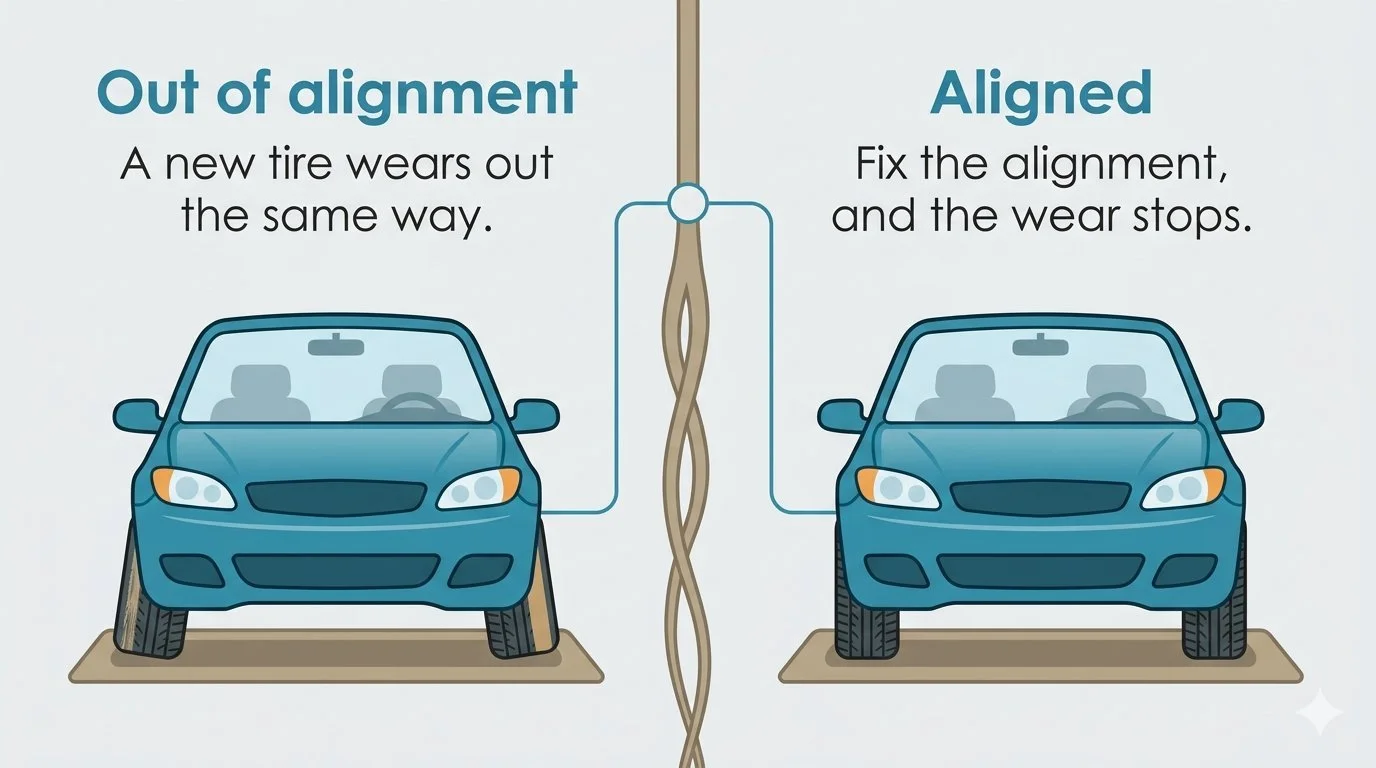
Think of wheel alignment. If a car's wheels are out of alignment, you can replace the worn tire, but the new one will wear down the same way. A lot of pain relief is replacing the tire. Structural Restoration goes after the alignment.
Two layers: your frame and your habits
Lasting change has to happen in two places at once.
The frame
This is the physical structure: the connective tissue (called fascia), the muscles, the joints, and how your body weight travels down through them to the ground. When one area is tight or out of position, other areas pick up the slack.
The habits
Your nervous system runs your posture on autopilot. After years in a pattern, a crooked stance starts to feel straight, because it's what your brain knows. That's why relief from a massage or a stretch often fades within a day or two: the tissue let go, but your brain pulled you right back into the familiar shape.
Think of a path worn across a lawn. Walk the same shortcut every day and the grass stops growing there. Hands-on release work helps the grass grow back. Retraining is choosing a new path and walking it until it becomes the easy way to go.
Why five methods
Over years of working one-on-one with students, Amir kept seeing the same thing: most of our aches and pains are ones we create ourselves. Unbalanced, repetitive movement leads the body to compensate, and over time those compensations turn into pain.
Chasing each symptom as it appeared wasn't enough. So he studied the methods that each solve part of the problem and brought the most effective parts of each together. Some loosen tissue. Some correct how weight is carried. Some teach your brain a new, better default. Together they address both the frame and the habits, and give you a strategy for keeping the improvement.
A quick primer on fascia and Anatomy Trains
Fascia is the connective tissue that wraps around and connects every muscle, bone, and organ in your body. It isn't a set of separate pieces. It's one continuous web from head to toe.
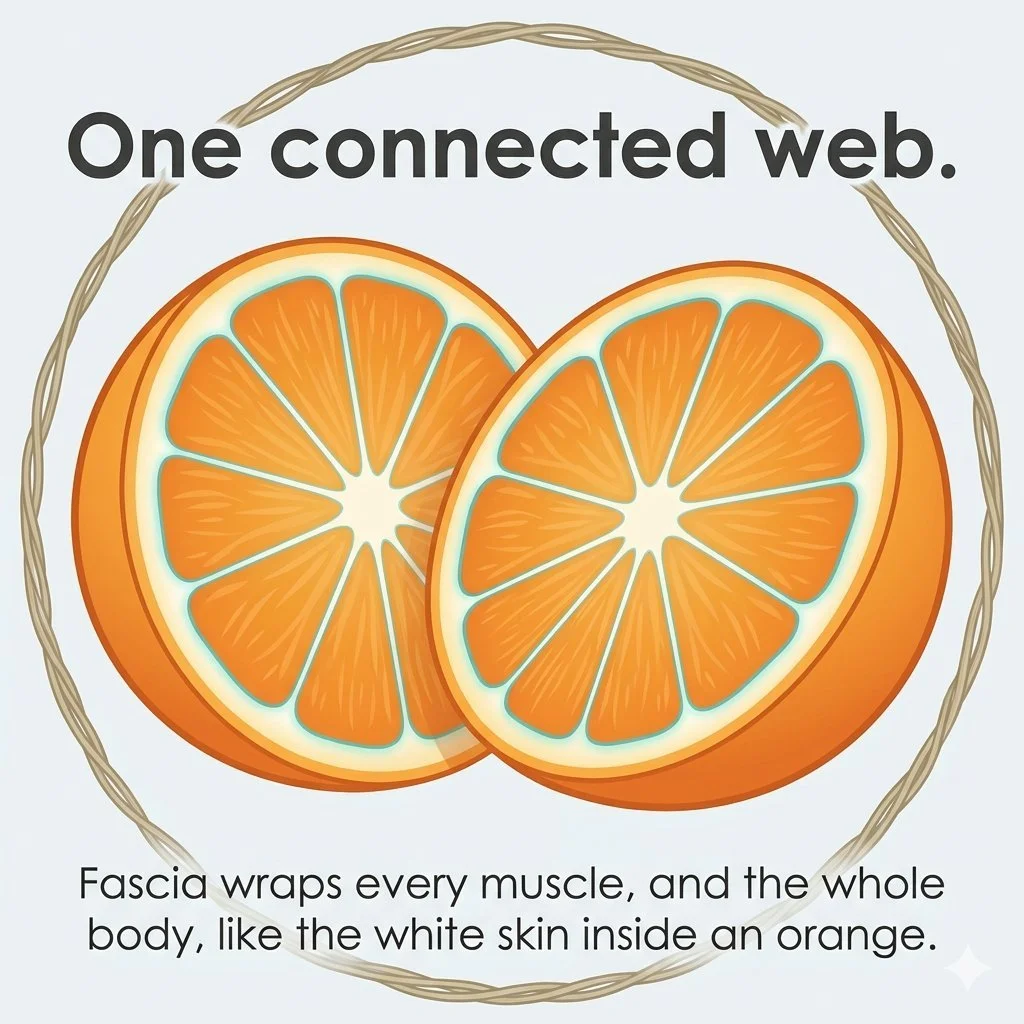
Think of an orange. The thin white skin wraps each segment, then wraps the whole fruit, and it's all one connected layer. Your fascia works the same way around each muscle and around the body as a whole.
Because it's all connected, tension in one spot can pull on places far away. Pull a snag at the bottom of a sweater and you'll see puckering all the way up to the collar.
Anatomy Trains
Anatomy Trains is a map of these long-distance connections. It uses a railway map as its metaphor: muscles are linked end to end through fascia into long "lines" that run the length of the body. Strain travels along these lines, which is how a problem in one area can show up as pain in another.
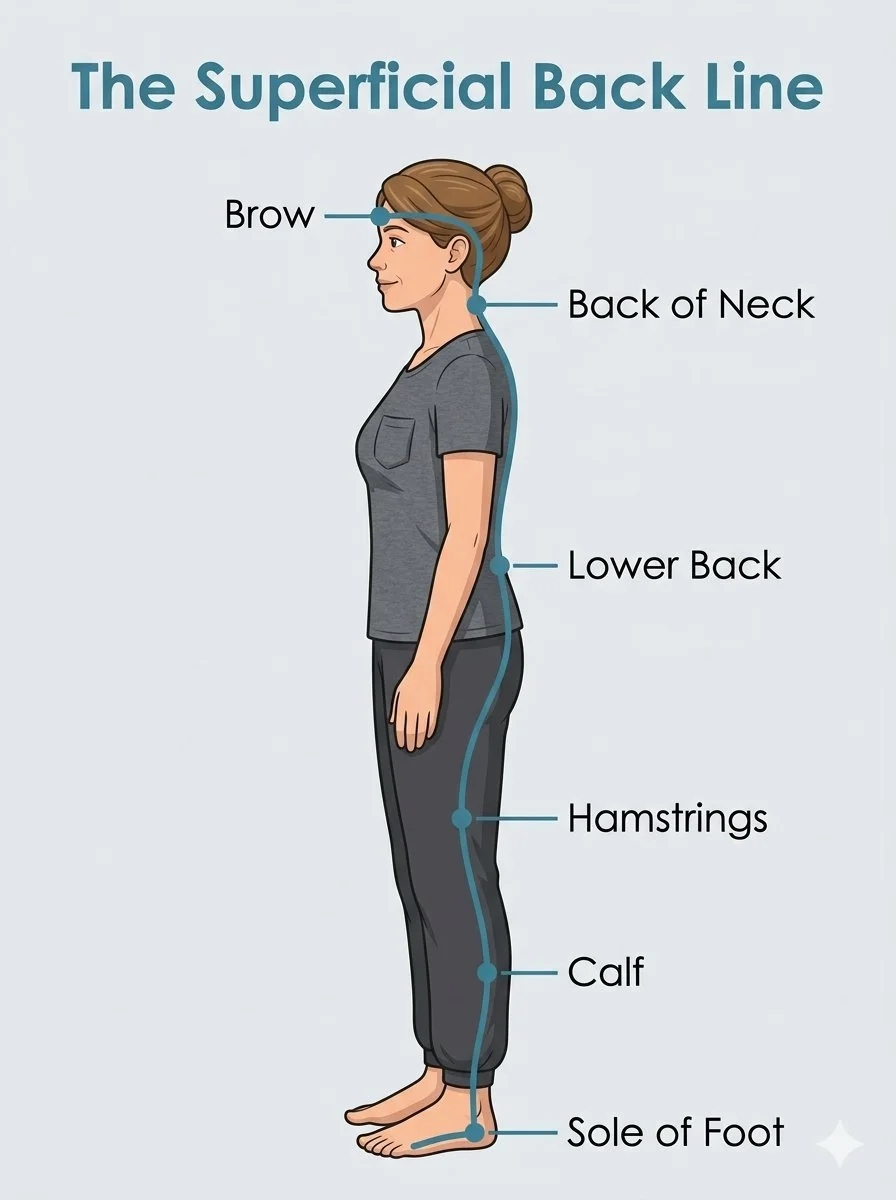
Here's one example, the line that runs up the back of the body:
The Superficial Back Line, one of the lines mapped in Anatomy Trains. Tight feet and calves can show up as tight hamstrings, a stiff lower back, or even tension headaches.
Seen this way, it makes sense that neck pain can be tied to an imbalance in the pelvis, or that a fallen arch can contribute to lower back pain.
Why this matters in your session
Anatomy Trains is the map Amir uses to look for the source, not just the sore spot. If your shoulder hurts, he'll look along the whole line it belongs to. Working the full line tends to bring more relief, and it's more likely to stick, because you're addressing the pull instead of the symptom.
The five methods
Here's what each one is, what it feels like, and what it adds.
Fascial Stretch Therapy
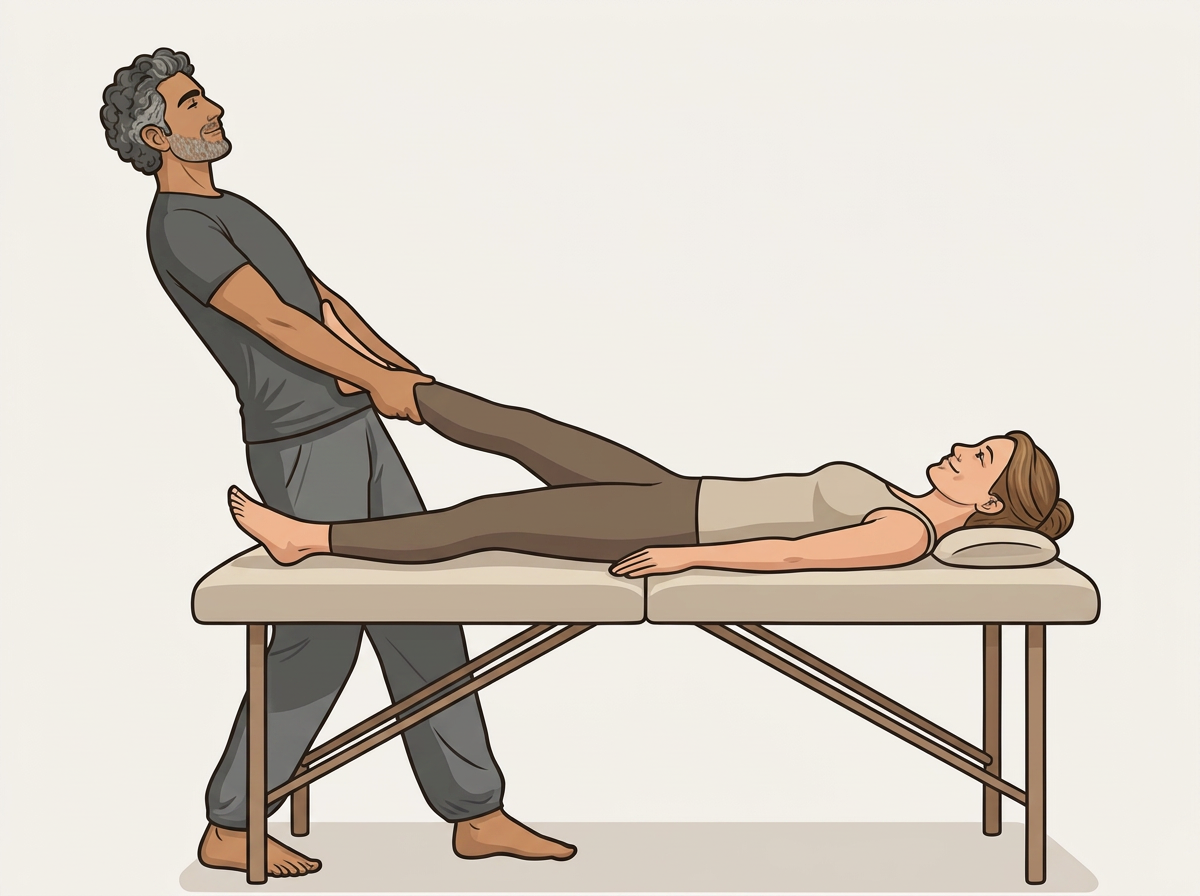
Go past the muscle. Reach the cause.
What it is
A hands-on, assisted stretching method. Traditional stretching targets one muscle at a time. FST works on the fascia and the joints, stretching along whole connected lines, the Anatomy Trains described above.
What it feels like
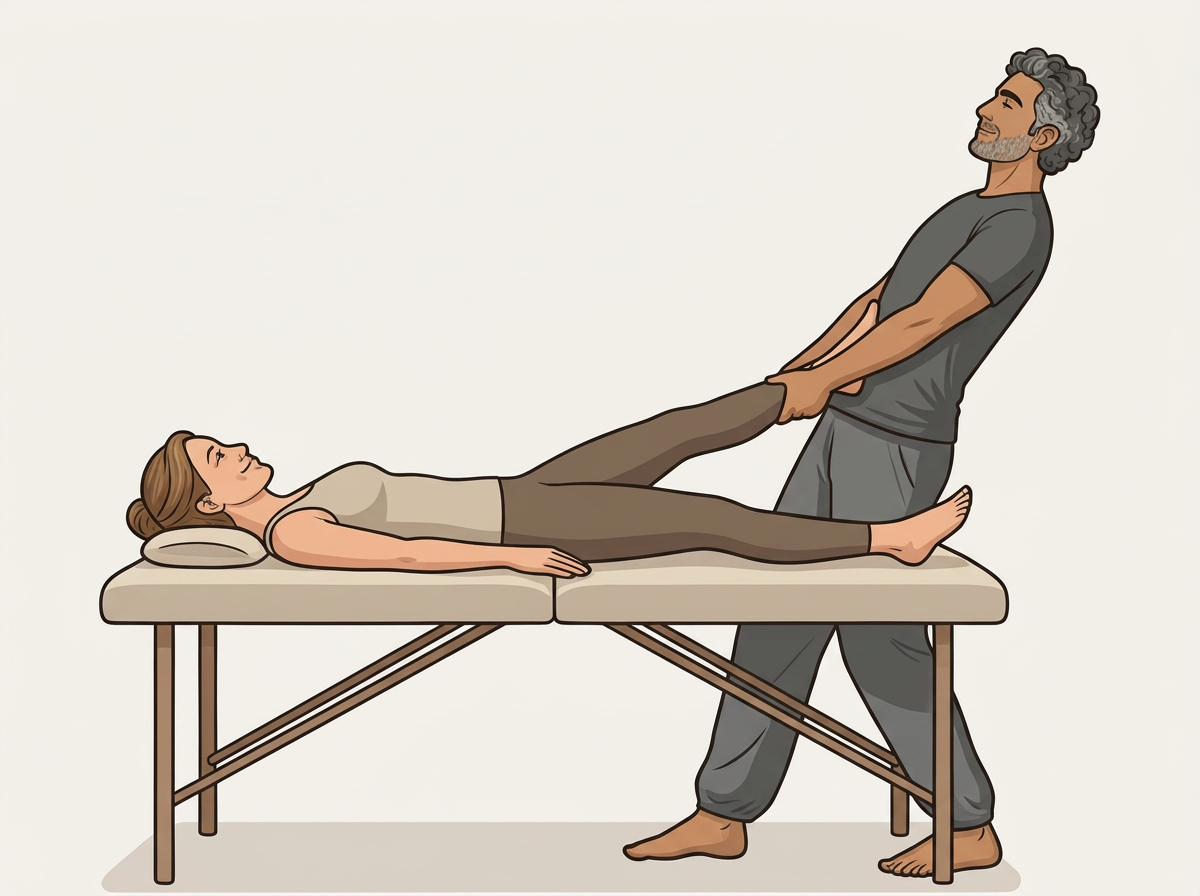
You relax while Amir does the work. He gently draws a limb out to create a little space in the joint, then moves it through smooth, wave-like motions in several directions, timed with your breathing. It should never be painful.
What it adds
It releases tension along full lines of the body, opens up joints, and helps calm the nervous system. This is where the tissue lets go.
Egoscue postural alignment
Correct the load, correct the pain.
What it is
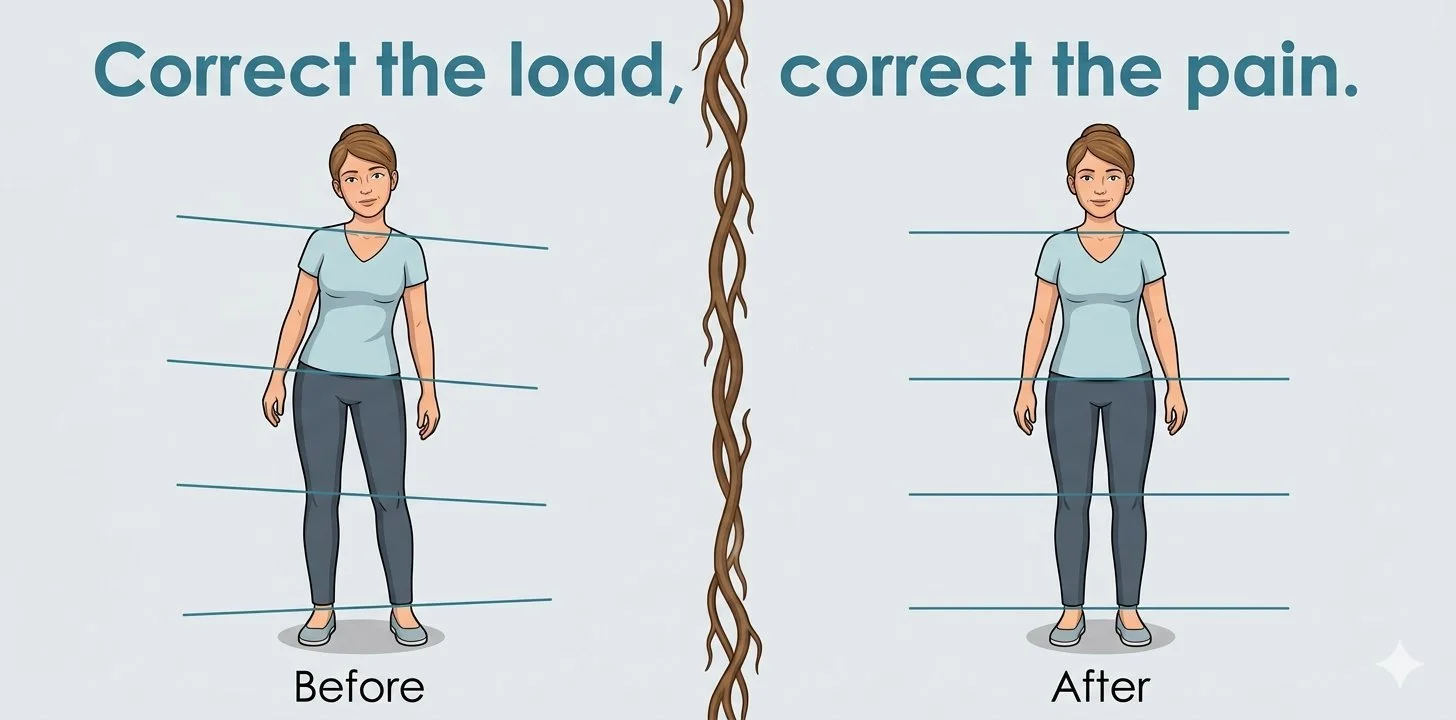
An approach that looks at your eight main weight-bearing joints: shoulders, hips, knees, and ankles. The idea is simple: muscles move bones. When some muscles are too tight and others too weak, they pull joints out of position, and those joints end up carrying weight they weren't built to carry. Pain usually follows, often somewhere other than the misaligned joint.
What it feels like
Amir looks at how you stand and move, from the front and the side. Then he teaches you simple positions and exercises, many of which will look familiar from yoga, chosen to guide your joints back toward level and square.
What it adds
It corrects how weight moves through your frame. It's also the foundation of your home practice, because these positions are easy to do on your own.
Why one knee and not the other? If running caused knee pain, both knees would hurt; they go on every run together. When only one hurts, the load isn't being shared evenly. That uneven load is what this method corrects.
Thai Yoga guided movement
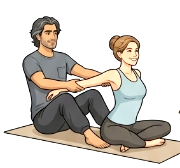
You don't force it. You're guided into it.
What it is
Sometimes called "assisted yoga." You stay fully clothed, and Amir moves your body into yoga-like stretches while you stay relaxed, using rhythmic pressure and gentle rocking.
What it feels like
Like doing yoga without any effort. Your only job is to breathe and let go. Common examples: a supported hamstring stretch, a guided twist, a gentle lift into a backbend.
What it adds
Two things. First, it reaches ranges of motion that are hard to get to on your own, because when you aren't working to hold a pose, your muscles stop guarding. Second, the slow rhythm and rocking help your body shift into its rest-and-recover mode, which is when it's most willing to let go of old holding patterns.
How FST and Thai Yoga work together
These two are natural partners, and Amir often blends them. Depending on what your body needs, he may use one on its own, one after the other, or deliver FST's gentle traction and wave-like stretching from within Thai Yoga postures. Either way, the aim is the same: release the tissue while your nervous system stays relaxed enough to let it go.
Hanna Somatics
What it is
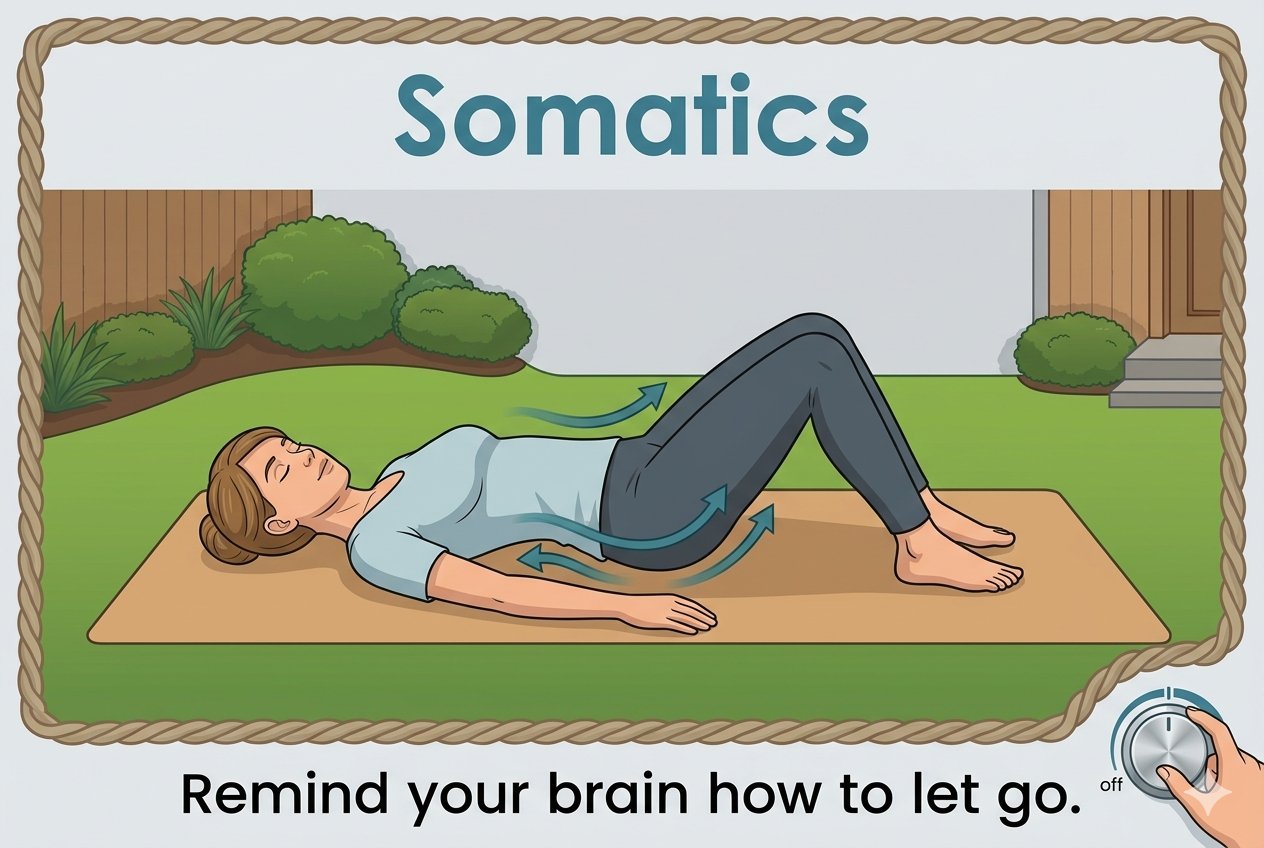
A gentle method of movement re-education that works on the brain's control of your muscles. It's built on an idea called sensory-motor amnesia: after stress, injury, or years of repeating the same movements, the brain can "forget" how to fully relax certain muscles. They stay partly tight all the time, and you no longer notice it.
What it feels like
Slow, easy movements, mostly lying on your mat, done with attention rather than effort. The core technique is based on the natural yawn-and-stretch you do when you wake up. You gently tighten a muscle a little more than usual, then release it very slowly, then rest. This gives your brain clear feedback so it can reset how tight that muscle stays at rest.
What it adds
This is the rewiring. Stretching lengthens a muscle for a while; Somatics changes the instructions the brain sends to it. That's why it's central to making changes last, and why many of these movements become part of your home practice.
Think of a thermostat. If it's set too high, opening a window cools the room for a moment, but the heat comes right back on. Stretching opens the window. Somatics turns down the thermostat.
Therapeutic yoga
Your practice, prescribed.
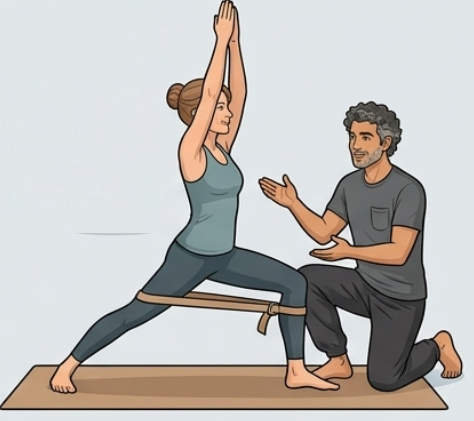
What it is
Yoga poses, breathing, and awareness practices chosen and adapted for your specific imbalances. The International Association of Yoga Therapists describes yoga therapy as helping people move toward better health and well-being through yoga's teachings and practices. The key difference from a group class: everything is selected for your body, not the average body.
What it feels like
This is the active part. Amir walks you through a short sequence of poses, modified as needed, and makes sure you can do them correctly on your own. Bring a phone or camera to record them.
What it adds
This is what makes the work last. The hands-on methods open the door; your practice at home walks the new path until it becomes your body's default. As Amir puts it, you're not being fixed. You're being guided toward your own healing.
How it comes together in a session
Look. Amir reviews your intake form and watches how you stand and move, following the Anatomy Trains lines to find where the pull is coming from.
Release. Fascial Stretch Therapy and Thai Yoga, alone or blended, loosen the tissue and calm the nervous system.
Realign. Postural positions guide your weight-bearing joints back toward balance.
Retrain. Somatic movements reset how your brain holds your muscles, and you learn a short set of therapeutic yoga practices while your body is open and receptive.
Take it home. You leave with your own practice, recorded on your phone, so the new pattern keeps building between visits.
How many sessions you'll need depends on your condition, how long the pattern has been in place, and your goals. Amir will talk this through with you after your first session.
How Structural Restoration is different
“What really appealed to me as I started studying each of these modalities is how much each of them looked kind of like yoga. Indeed, they all have yoga somewhere in their roots, but they all approach a different aspect of our condition”
Many students come to Structural Restoration while also seeing a massage therapist, physical therapist, or chiropractor, or while taking regular yoga classes. It works well alongside all of them. What sets it apart is the approach:
It combines hands-on work and self-practice in one session
You're both worked on and taught. The hands-on methods create change; the practices you learn let you keep it.
It follows the whole line, not just the sore spot
Using the Anatomy Trains map and a look at how your weight-bearing joints line up, Amir looks for where the pull is coming from, which may be far from where you feel it.
It works on habits, not just tissue
Somatic movement and postural retraining address the nervous system's role in how you hold yourself, so your body is less likely to slide back into the old pattern.
It's built around you
Your session and your home practice are chosen for your body and your pattern, not a general routine.
It's education
The goal is for you to understand your own patterns well enough to manage them. Over time, you need less help, not more.
Your first session
Before you come
Fill out the intake form. It helps Amir understand your history, injuries, and goals before you arrive.
Eat lightly beforehand, and avoid a big meal right before you come. Some positions involve gentle pressure and twisting.
What to wear and bring
Stretchy, comfortable clothes you could do yoga in. Longer pants or leggings work better than shorts or skirts, since your legs will be moved in many directions.
A phone or camera to record the practices you'll take home.
Sessions are held outdoors, so dress in layers for the weather.
During the session
The session follows the steps above. You'll start by talking through what's bothering you and what you'd like to be able to do. Amir will then watch how you stand and move, do hands-on work while you relax, and finish by teaching you a short home practice.
Will it hurt?
It shouldn't. You'll feel stretching and pressure, and some areas may feel intense as they let go, but sharp pain is a signal to stop. Speak up any time something doesn't feel right. Amir will adjust.
Afterward
Most people feel looser, lighter, and more upright, and often relaxed or a bit tired. It's normal to feel mild soreness for a day or two as muscles that have been tight for a long time start to lengthen and your body adjusts to a new position. Start your home practice the next day, and notice what changes. Those observations are useful at your next session.
Is this right for me?
Structural Restoration is a good fit if:
You have aches, stiffness, or tension that keeps coming back.
You've gotten relief from other approaches, but it doesn't last.
You sit, drive, or work at a screen for long stretches, or your work or sport repeats the same movements.
You have back, neck, shoulder, knee, foot, hand, or wrist issues, which are Amir's specialty areas.
You want to understand your own body and have tools to take care of it yourself.
You don't need to be flexible, fit, or experienced with yoga. Everything is adapted to where you are now.
When Structural Restoration isn't the right fit
This work is not offered during pregnancy, and it isn't appropriate during an acute flare-up, when pain is sharp, intense, or getting worse. If you're in a flare-up, wait until it has settled before booking.
Check with your doctor first if you have:
A recent surgery, fracture, or new injury
Severe or unexplained pain, or pain along with numbness, tingling, or weakness
Osteoporosis, a history of blood clots, or a heart condition
Structural Restoration is educational and movement-based. It works alongside medical care, not in place of it. Please note any of these on your intake form.
About Amir
Amir has taught yoga therapeutics for three decades. He works privately with students facing specific physical challenges, helping them uncover the habitual alignment patterns that cause or worsen pain elsewhere in the body.
E-RYT 500
Certified Fascial Stretch Therapist
Egoscue trained
30 years teaching yoga therapeutics
His specialty areas are back pain, neck and shoulder issues, knee problems, and foot, hand, and wrist issues.
His approach is educational rather than purely treatment-based. The goal is not to "fix" you, but to guide you, wisely and with compassion, toward your body's own healing response, and to give you the awareness and tools to keep it going.
Healing Through Yoga with Amir. Structural Restoration is an educational, movement-based practice and is not a substitute for medical care.